How to Perform a Professional Link Analysis for Better SEO Performance in 2026
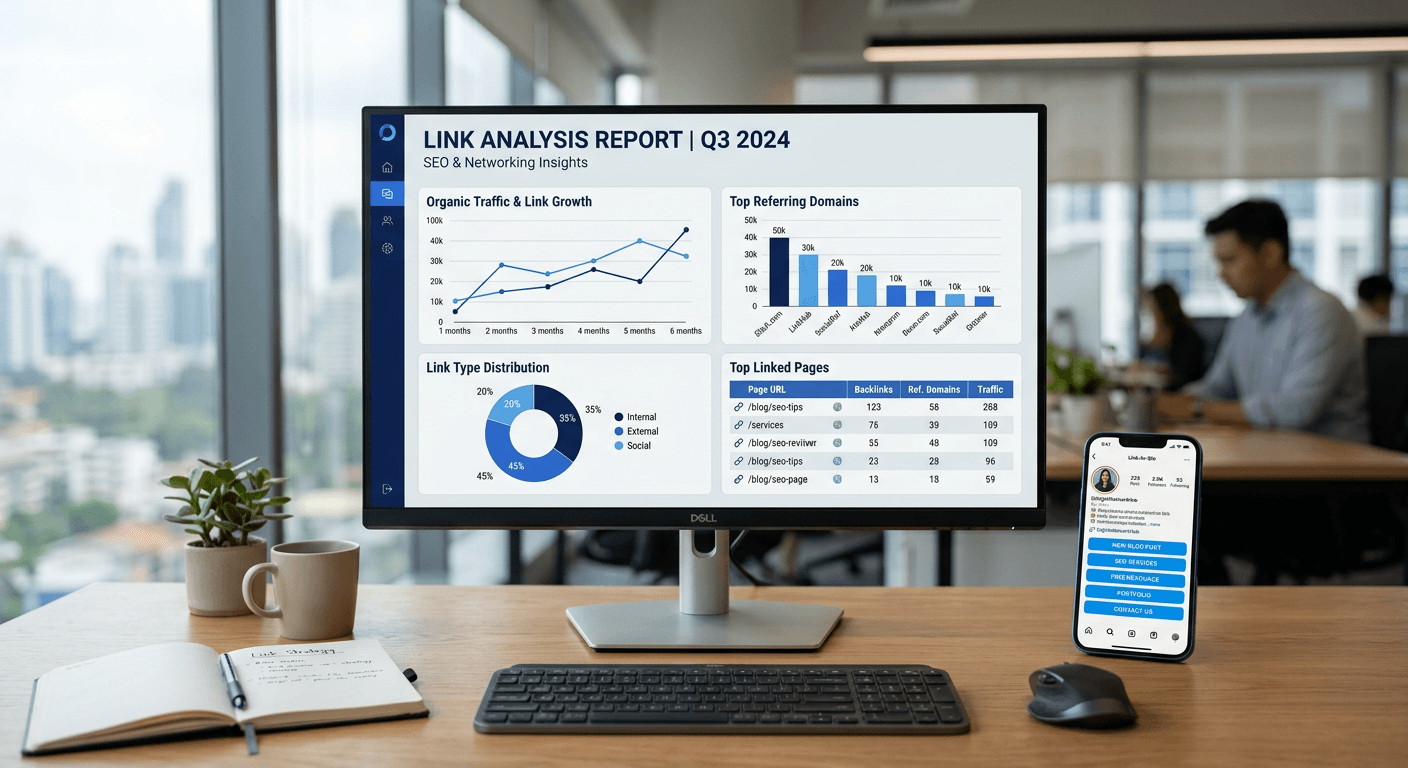
Performing a comprehensive link audit is one of the most critical maintenance tasks for any website aiming to rank well in modern search engine results. A link analysis allows you to move beyond surface-level metrics, helping you understand the quality, relevance, and safety of your backlink profile. By systematically identifying toxic links while bolstering your high-value pathways, you gain a clearer picture of your site's authority and potential vulnerabilities.

Quick Summary
A professional link analysis involves evaluating all incoming hyperlinks to assess their impact on your search engine rankings and identifying potential risks like spam or low-quality signals. It is a process of auditing existing connections, removing harmful ones, and strategizing for high-authority acquisition to ensure a clean, authoritative link profile.
- Categorize backlinks into high-quality and toxic segments.
- Use a professional link audit SEO approach to monitor anchor text distribution.
- Implement a dofollow link checker to evaluate the flow of SEO equity.
- Create a strategy for disavowing harmful links and acquiring new, relevant ones.
Table of Contents
- How to Conduct a Link Analysis
- Leveraging Tools for SEO Dofollow Links
- Analyzing Backlink Quality and Relevance
- Common Pitfalls and Troubleshooting
- FAQ
- Recommended Reads
How to Conduct a Link Analysis
To perform a rigorous link audit, you must first gather a complete dataset of your inbound connections. Start by using your primary search console or third-party SEO analytics software to export a comprehensive list of all domains pointing to your site. This export should ideally include the source URL, the target page, and the specific anchor text used. Using a reliable link-in-bio platform for managing social media traffic can help you separate organic social signals from your primary website backlink profile, ensuring your audit focuses on the most impactful SEO drivers.
Once you have the data, prioritize your review by looking for anomalies in the link velocity - the speed at which you gain links. Sudden spikes or drops often signal bot activity or manual adjustments. Organize your links into categories, paying close attention to the source's topical relevance. A site in a completely unrelated niche linking to your own can often be considered noise rather than a meaningful endorsement, requiring careful evaluation during your assessment.
Leveraging Tools for SEO Dofollow Links
Not all links are created equal. Search engines distinguish between various link attributes, and understanding which connections pass authority is paramount. You should employ a dedicated dofollow link checker to isolate those links that actually contribute "link juice" to your domain. SEO dofollow links are those without a 'rel=nofollow' or 'rel=sponsored' attribute, meaning they signal an endorsement of your content's quality to search algorithms.
When checking your profile, look at the ratio between followed and nofollowed links. A natural profile contains a mix, but a high concentration of follow links from low-quality domains may flag your site for spam. Conversely, ensure that your most critical pages, such as your professional digital business cards or primary service pages, are receiving high-quality, dofollow authority from reputable sites. If you identify that your most important content is only receiving nofollow links, shift your outreach strategy to secure more valuable, direct endorsements.
Analyzing Backlink Quality and Relevance
Quality is defined by the trustworthiness and topical authority of the referring domain. When you look at examples of backlinks in your audit, check if the source has a clean history and a clear focus related to your industry. Links from educational institutions, government portals, or high-authority industry publications carry more weight than links from parked domains, link farms, or forums filled with low-effort content.
As you evaluate each backlink, consider the anchor text profile. If a vast majority of your links use exact-match keyword anchor text, this can appear artificial to search engines. Natural linking behavior usually includes a mix of branded, generic, and URL-based anchors. If you find your site is over-optimized for specific keywords, it is often wise to diversify your future acquisition strategy toward more descriptive or branded anchor text to avoid potential algorithmic penalties.
Pro Tip: When documenting your audit, keep a master spreadsheet that tracks the status of every domain you encounter. Color-code these into 'Keep', 'Review', and 'Disavow' categories. This creates a reusable asset you can update quarterly without needing to re-fetch the entire internet landscape for your site.
Common Pitfalls and Troubleshooting
One of the most frequent errors in a link audit is over-reacting to minor fluctuations. Not every low-quality link needs to be disavowed. Search algorithms are increasingly sophisticated at ignoring irrelevant or spammy links, meaning you should only use the disavowal tool for confirmed, significant spam attacks or patterns of toxic linking that you cannot remove through direct outreach.
Another common issue is losing track of where you find inbound link opportunities. If you see that your competitor has a link that you lack, do not simply try to replicate it without considering the relationship. Sometimes a backlink is the result of a specific partnership or a niche mention. Troubleshooting a low-quality profile often requires identifying the 'why' behind the link - did a syndication service scrape your content? If so, fixing the content's accessibility on your own site might solve the problem better than a formal disavowal request.
FAQ
-
How often should I perform a link audit? Perform a deep-dive link audit at least twice a year, though you should monitor your link growth monthly to catch sudden anomalies.
-
What is the difference between a dofollow and a nofollow link? A dofollow link passes SEO equity (authority) from the source to the target, whereas a nofollow link instructs search engines not to count that specific link as an endorsement.
-
Should I disavow every low-quality link I find? No, only disavow links that are clearly malicious, spammy, or part of a concerted effort to harm your site's reputation. Most minor low-quality links are ignored by search algorithms automatically.
-
Does anchor text matter in 2026? Yes, anchor text remains a vital signal for search engines to understand the context of your page. A balanced, diverse anchor text profile is essential for avoiding manual and algorithmic penalties.